Mjolnir
In productionCreator-first streaming and monetization. Edge-delivered, direct creator payments, and an audience shown as named relationships.
Role · Product Designer, sole designer on the engagement
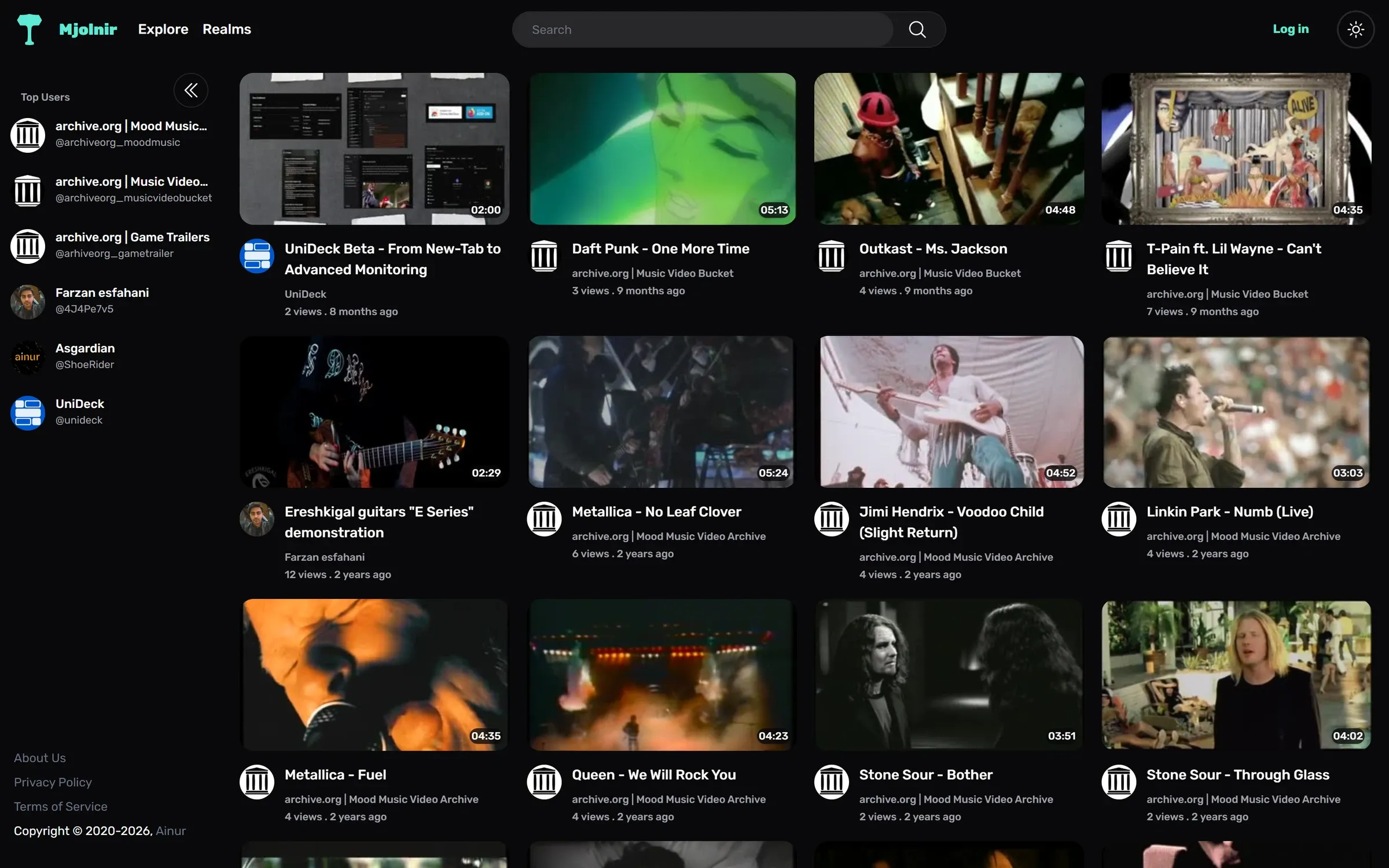
Mjolnir is a creator-first streaming and monetization platform, in production at mjolnir.tv. It is edge-delivered, so playback holds up wherever the audience is. It pays creators directly, without an intermediary taking the relationship along with its cut. And its dashboard surfaces an audience as named relationships rather than as opaque metrics, so a creator sees the people who keep showing up, not a count that flattens them. I was the sole designer on the engagement, from the payout surfaces to the room a creator works in every day.
The design problem was holding to Jakob’s Law while still being innovative. A creator streaming platform inherits strong conventions from the products its users already live in, and those conventions are exactly what make it legible in the first thirty seconds. But the premise departs from them. Here the creator owns the audience, the payment, and the relationship, and convention has no settled pattern for that. So the work was deciding, screen by screen, where to meet the expectation and where the expectation was the thing being argued against.
Where someone was doing what they had done a hundred times on another platform, the interface behaves the way they expect and gets out of the way. Where the model is genuinely different, the payment that arrives without a middleman, the audience shown as people rather than a number, it slows down and makes the difference explicit. A borrowed convention there would quietly misdescribe what is happening to a creator’s money and their audience. The live product is the argument, and it is the shortest way to see the rest of it.